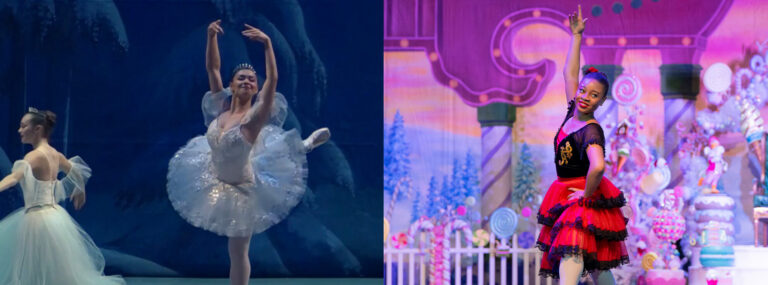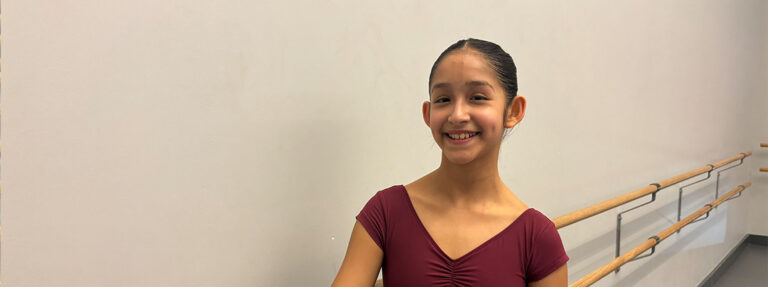
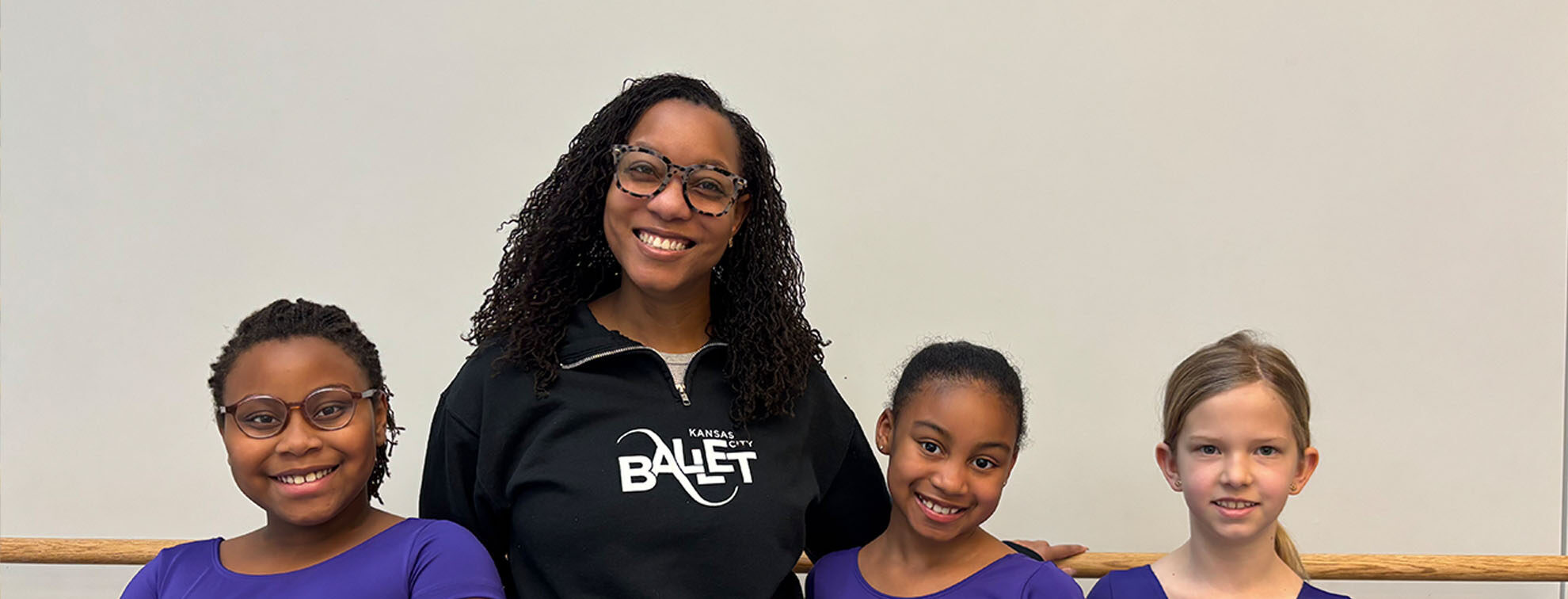
Miyesha McGriff, a Kansas City native, became Kansas City Ballet’s R.O.A.D. Program Administrator in 2024. She trained at Kansas City Ballet School, performed as Clara in Todd Bolender’s Nutcracker, and spent summers at The Ailey School in New York before earning a BFA in dance from the University of Missouri-Kansas City. From 2017 to 2023, she danced with Collage Dance Collective in Memphis, later connecting dancers with communities through Collage Dance Turning Pointe, before returning to Kansas City.
As the driving force behind R.O.A.D., you coordinate schools, teaching artists, musicians, curriculum, and semester-end showcases—while overseeing a program that just turned 25. What does the next chapter of the program look like?
The goal is straightforward: to reach more students, schools, and families. I want R.O.A.D. in every school within our reach, with a teaching staff grown to match that ambition. And it’s not just about the kids. It’s about the principals, the classroom teachers, and the parents who witness how their children are transformed. When the adults see that, it multiplies everything. That’s the whole ecosystem we’re trying to serve.
This work only happens because no one does it alone. I’m nothing without the teaching artists, the musicians, the curriculum, and the colleagues I lean on every day. My biggest role is fostering relationships: making sure students feel seen, making sure teaching staff feel supported. Staying rooted in that spirit of shared investment, and staying true to what this program has always meant, is what I want to be celebrating in the years to come.
For many Kansas City elementary students, R.O.A.D. is their first encounter with dance, and without it, they might never have one. What does expanding that access mean to you personally?
I’m a product of Kansas City Public Schools, and I lived this from the other side. I was the girl who did ballet, and my classmates had no idea what that meant — until my senior year, when they came to see The Nutcracker and suddenly understood the discipline, the time, the sacrifice behind it. That experience stays with me.
What also matters deeply is what dance offers students who don’t thrive in traditional classroom settings. A kid who can’t sit still, who’s always getting in trouble for having too much energy: movement gives them a different entry point. If they’re working on math, they get to stand up and move through the problem. That’s not a workaround; that’s a different, equally valid way of learning. R.O.A.D. helps students understand there’s nothing wrong with them. They just learn differently. And that realization can be life-changing.
Kansas City Ballet’s own surveys show that roughly one in three audience members trace their love of ballet back to dancing as a child. How do you think about R.O.A.D.’s role in nurturing not just young dancers, but future audiences and supporters of the art form?
The pipeline is real: a student moves through R.O.A.D., maybe finds a scholarship program, grows up, and becomes a patron of the arts. That’s meaningful. But what strikes me even more is the emotional memory at the root of it. People may not know what happens backstage, but they never forget how the art made them feel the first time. That feeling carries. It becomes part of who they are.
And then those people become parents. They want to give their children the same thing they felt, and their children will want the same for theirs. That’s the deeper seed R.O.A.D. plants: not just an appreciation for dance, but an understanding of why the arts need to be sustained, passed on, kept alive. My mother had no background in dance. I still don’t know exactly what led her to put me in it. But she followed that instinct, and it shaped everything. I think about that every time I show up to this work.
Header image: Miyesha McGriff with R.O.A.D. scholarship students at the Todd Bolender Center for Dance & Creativity. Photo by Kelly Leahy.