Kansas City Ballet is proud to partner with Performance Rehab, the Company’s exclusive physical therapy provider. Leading that partnership is Kendra Gage, DPT, OCS, a former dancer whose dance background and clinical work with companies like The Joffrey Ballet and Hubbard Street Dance Chicago make her uniquely suited to guide KCB’s dancers through injury prevention, rehabilitation and performance. As the season approaches, we spoke with Kendra about her pre-season work, and some of her insight on balance applies well beyond the studio.
Performance Rehab has worked with Kansas City Ballet for years. For readers who don’t know, what does that partnership actually look like behind the scenes, especially in the weeks before a new season begins?
During the season, we have a physical therapist on-site at the Bolender Center 10 hours a week for maintenance and preventive care. We’re also present an hour prior and during every performance to help the dancers feel prepared for the stage. Many times, we offer preventive advice, but also management of ongoing pain and concerns.
Before the season begins, we prepare by setting up a schedule and working with the dancers during pre-season classes with conditioning. We try to tailor some of the exercises on movements to benefit them for the first rep of the year. The Saturday before the season starts, each dancer undergoes a pre-season screen. This includes discussion with the team doctor and movement screens with the therapy team. This allows us a moment to discuss each dancer’s health and how we can help them stay healthy throughout the season.
Why is balance such an important focus for you and your team when you’re assessing dancers before the season starts?
We know through research that if each dancer can pass a difficult balance test their chance of injury through the season decreases. Dancers are highly trained athletes with a heavy demand, including being asked to balance in difficult circumstances (on one small platform of their foot, with bright lights and distractions, loud music, and while partnering sometimes)! By screening this at the start of the season, we can discuss preventive measures with each dancer who may need extra work.
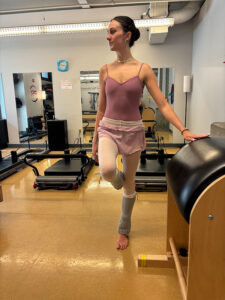
What does a balance assessment for a dancer actually involve? We understand your team uses things like one-leg balance challenges. What are you looking for?
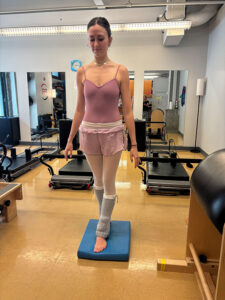
We ask them to balance on one foot with their eyes closed and restricted arm movements. This gives us an idea of their true proprioception without relying on other senses.
You mention that Performance Rehab relies on the latest research to guide your work. How does that research shape the way you train and condition dancers today, versus even five or ten years ago?
As a team we are highly involved in national (Dance USA, PAMA) and international (IADMS) organizations that present the latest research and movement trends on dancer health. Dancers are constantly being pushed to achieve more, so we must also advance to help them stay healthy through the increased demands.
Balance isn’t just a dancer’s concern. What are a few simple things our readers, many of whom aren’t professional athletes, could do to start improving their own balance?
We can all benefit from small, intentional moments to challenge our balance. As we age, balance can become more difficult, so try simple strategies like narrowing your base of support or standing on one leg while brushing your teeth or waiting for the microwave.
You’ve worked with dancers your entire career, from Joffrey to Hubbard Street to Kansas City Ballet. What keeps you drawn to this specific population?
I grew up dancing myself, so I’ve always had a deep appreciation for the discipline, artistry, and incredible physical demands of dance. I’ve also always been fascinated by the potential of the human body and how movement can be used as a form of art and expression. What keeps me drawn to working with dancers is the opportunity to help them understand and maximize that potential throughout their careers and across their lifespan. I love being part of their journey — whether that means helping them recover from an injury, prevent one, or simply find ways to move and perform at their highest level while continuing to explore what’s possible through dance.
Learn more about Kansas City Ballet’s 2026-2027 season.
Learn more about Performance Rehab.
Header image: Performance Rehab’s Kendra Gage works with Kansas City Ballet company dancer Olivia Jacobus. Photo by Kelly Leahy.